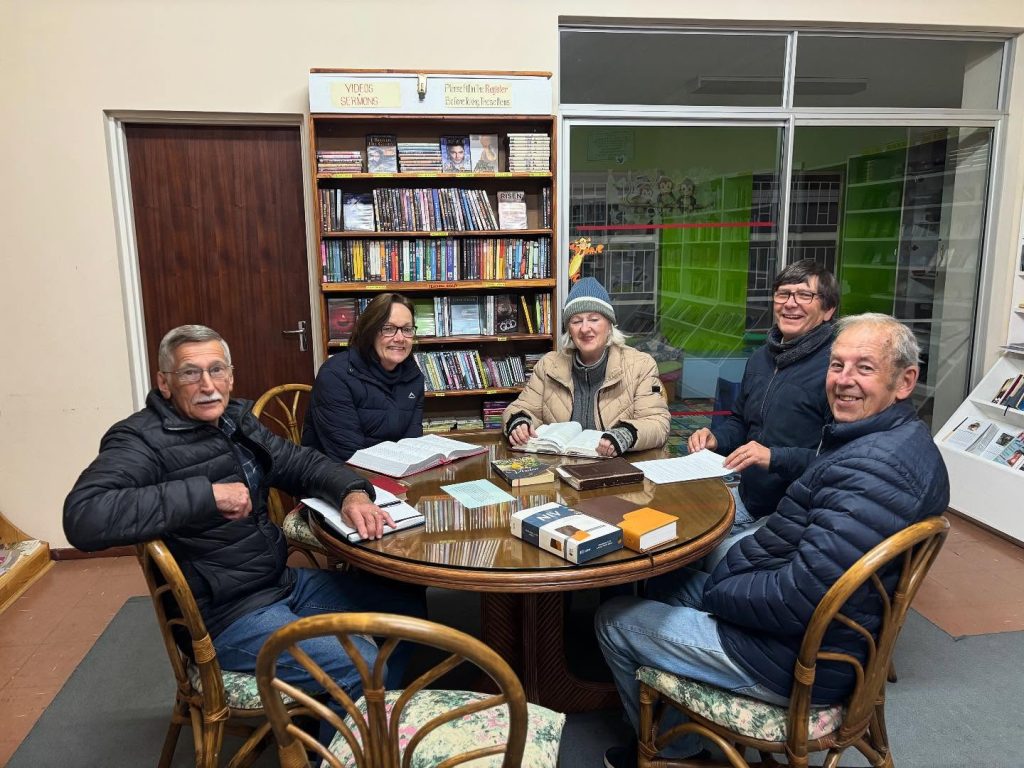
Open in prayer
Open with each member of the group sharing a prayer request, and then pray for one another.
Scripture reading
1 Jonah was greatly displeased and became furious. 2 He prayed to the Lord, “Please, Lord, isn’t this what I said while I was still in my own country? That’s why I fled toward Tarshish in the first place. I knew that you are a gracious and compassionate God, slow to anger, abounding in faithful love, and one who relents from sending disaster. 3 And now, Lord, take my life from me, for it is better for me to die than to live.”
4 The Lord asked, “Is it right for you to be angry?”
5 Jonah left the city and found a place east of it. He made himself a shelter there and sat in its shade to see what would happen to the city. 6 Then the Lord God appointed a plant, and it grew over Jonah to provide shade for his head to rescue him from his trouble.[a] Jonah was greatly pleased with the plant. 7 When dawn came the next day, God appointed a worm that attacked the plant, and it withered.
8 As the sun was rising, God appointed a scorching east wind. The sun beat down on Jonah’s head so much that he almost fainted, and he wanted to die. He said, “It’s better for me to die than to live.”
9 Then God asked Jonah, “Is it right for you to be angry about the plant?”
“Yes, it’s right!” he replied. “I’m angry enough to die!”
10 And the Lord said, “You cared about the plant, which you did not labor over and did not grow. It appeared in a night and perished in a night. 11 So may I not care about the great city of Nineveh, which has more than a hundred twenty thousand people who cannot distinguish between their right and their left, as well as many animals?”
Jonah 4:1-11
1. What did you find difficult to grasp or fresh in this passage?
Jonah is furious that God spared Nineveh. He prays, quotes God’s character, and asks to die. As the sermon said: “Jonah was greatly displeased and became furious. Furious. The word means to burn. Do you remember the king’s hope in chapter 3? That God might turn from his burning anger? He did. God’s anger cooled. And Jonah’s anger caught fire.” And then: “Nineveh turns from evil, and Jonah calls the rescue evil.”
Was there anything in this passage that struck you as new, surprising, or hard to understand? Perhaps Jonah’s anger at mercy? The fact that he quotes Scripture as a complaint? Or his death wish? Share what stood out to you.
2. What does Jonah’s prayer in verse 2 reveal about his heart?
Jonah finally tells us why he ran. As the sermon said: “He did not run because he feared Nineveh. He ran because he knew God. He knew God would forgive. And he could not stand it.” And then: “Jonah’s creedal belief is perfect. His heart is not. He loves God’s creed for Israel. He hates God’s application for Nineveh.” The sermon pressed this home: “Jonah wants mercy for Jonah, and judgement for Nineveh.”
How can a person know God’s character so well and yet resist God’s heart so deeply? Where do you see this same tension in your own life—knowing God is merciful, yet struggling when that mercy reaches someone you think doesn’t deserve it?
3. Why does Jonah quote Exodus 34 as a complaint rather than a comfort?
The words Jonah quotes come from Exodus 34—God’s own proclamation of His name after Israel worshipped the golden calf. As the sermon said: “Jonah quotes the Lord’s proclamation of himself as a complaint. Jonah’s creedal belief is perfect. His heart is not. He loves God’s creed for Israel. He hates God’s application for Nineveh.” And then: “Jonah has spoken of God’s mercy before. Chapter 2. Inside the fish. Sinking. Drowning. Out of options. And what did he cry? Salvation belongs to the Lord. He meant it. When it was his neck. When it was his life. Salvation belongs to the Lord. But now? Not for them.”
Why is it possible to rejoice in God’s mercy when it saves us and yet resent it when it saves others? What does this reveal about the difference between loving grace in theory and loving grace in practice?
4. How does the cross change the way you see your enemy?
The sermon pointed to another hill. Another city. “Jonah sits outside the city on a hill. He watches. He waits for judgement to fall on people who cannot tell their right hand from their left. Remember another hill. Outside another city. A man is lifted up there, and the people who put him there are his enemies. They mock him. They gamble for his clothes. Yet he says, Father, forgive them, because they do not know what they are doing.” And then: “Jonah wanted the city destroyed. Jesus walked into the destruction. Not as a spectator. As the substitute.”
How does seeing Christ die for His enemies—for you—change the way you view the person who has wronged you? What would it look like to pray for that person by name this week?
Who can you share this with?
A spouse, a child, a friend, a co-worker. Who can you share something you’ve learnt with?
Closing prayer
Close your group time by taking specific worries to God together. Pray over the tangible needs mentioned in the group, actively trusting the Heavenly Father who knows what you need before you ask.
Find a community life group
Watch the sermon
Read the sermon
Discover more from Benoni Baptist Church
Subscribe to get the latest posts sent to your email.