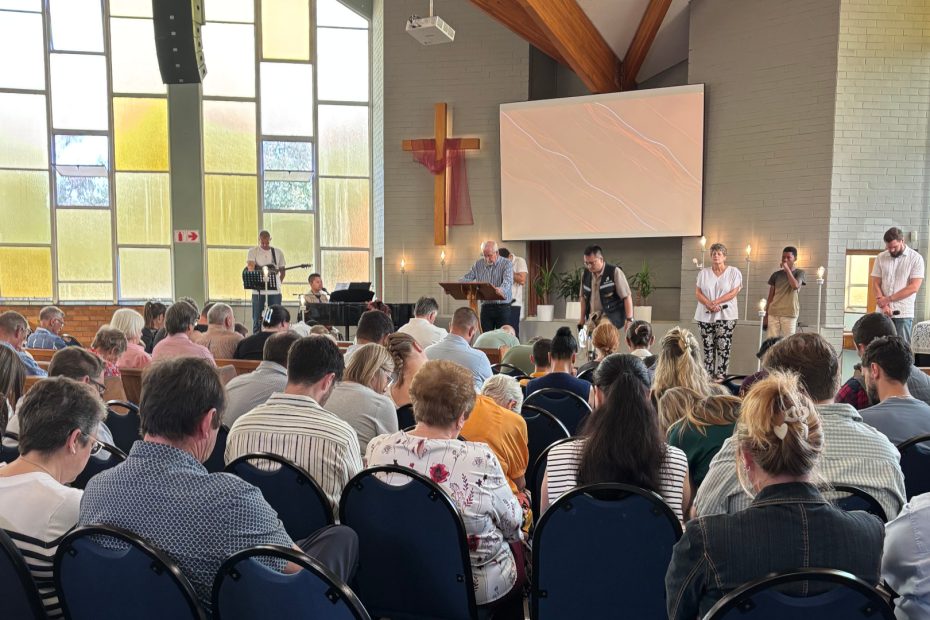
The CHURCH as the whole company of those who have been redeemed by Jesus Christ and regenerated by the Holy Spirit. The local Church, being a manifestation of the universal Church, is a community of believers in a particular place where the Word of God is preached and the ordinances of Believer’s Baptism and the Lord’s Supper are observed. It is fully autonomous and remains so notwithstanding responsibilities it may accept by voluntary association.
- Our baptist principles
- The direct lordship of Christ
- The church
- Believer’s baptism
- The congregational principle
- The priesthood of all believers
- Religious liberty
- Separation of church and state
We continue walking through the seven Baptist Principles. These principles sit at the heart of our founding documents. You can find them on our website here.
Why now? Because we are updating our constitution. We have changed the section on deacons. Soon we will consider the section on elders. Before we talk about mechanics, we need the convictions that drive us. This is the second of those convictions.
In 249 AD, the Roman Emperor Decius decided to crush the church. His strategy was simple. Go after the bishops. Break the leaders, break the movement. But something surprised him. The local congregations did not stop meeting. They chose new leaders. They governed themselves. They kept preaching. What Decius discovered is that the church’s strength was not in a centralized hierarchy. It was in scattered, Spirit‑filled assemblies. Each one accountable directly to Christ.
As we change our constitution, the autonomy of the local church is not a luxury. It is a responsibility. We do not look to a denomination to tell us what to do. We do not outsource hard decisions to a distant body. The authority stays here. The accountability stays here. That is what it means to be autonomous. Not isolated. We partner gladly with other churches. But we partner voluntarily, not under compulsion.
1 Timothy 3:15 anchors this truth. Paul writes to Timothy, If I delay, you may know how one ought to behave in the household of God, which is the church of the living God, a pillar and buttress of the truth. Notice what Paul does not say. He does not say the denomination is the pillar of truth. He does not say the convention or the bishop or the headquarters. He says the local church is the pillar and buttress of the truth. That means the responsibility for upholding the gospel in Benoni rests right here. Not in London. Not in Cape Town. Here.
How does this shape us at Benoni Baptist Church? We cannot blame anyone else when we stray. And we cannot wait for anyone else to rescue us. The elders you affirm are your elders. The members you receive are your members. The decisions you make—budget, constitution, leadership—are your decisions. Under Christ. That is autonomy. It is a weight. But it is also a gift.
You are not a number in a vast institution. You are part of a specific family. When you are absent, the body feels it. When you serve, the body is built up. The choices that shape your discipleship—who preaches, what we teach, how we love our community—are made by the people you worship with, under elders you know. No distant bureaucrat makes decisions for you.
So here is the question I leave with you. If this church is the pillar and buttress of the truth in Benoni, will we take that responsibility seriously? Will you attend the church meeting? Will you pray over the decisions? Will you hold your elders accountable in love? And when the time comes to affirm new leaders or to amend our constitution, will you act like an autonomous church—free under Christ, and therefore responsible before Him? This is our conviction. This is our weight. And this is our gift.
Joshua 24:15. But as for me and my household we will serve the Lord
Pingback: Changes to the elders section of our constitution - Benoni Baptist Church